Open your parking to the public without financing losses.
A local authority deploying public charging stations can turn it into a profitable service rather than a cost centre. Sparklin load balancing eliminates the need for electrical grid reinforcement, usage-tailored solutions cut investment costs, and online payment generates revenue effortlessly.
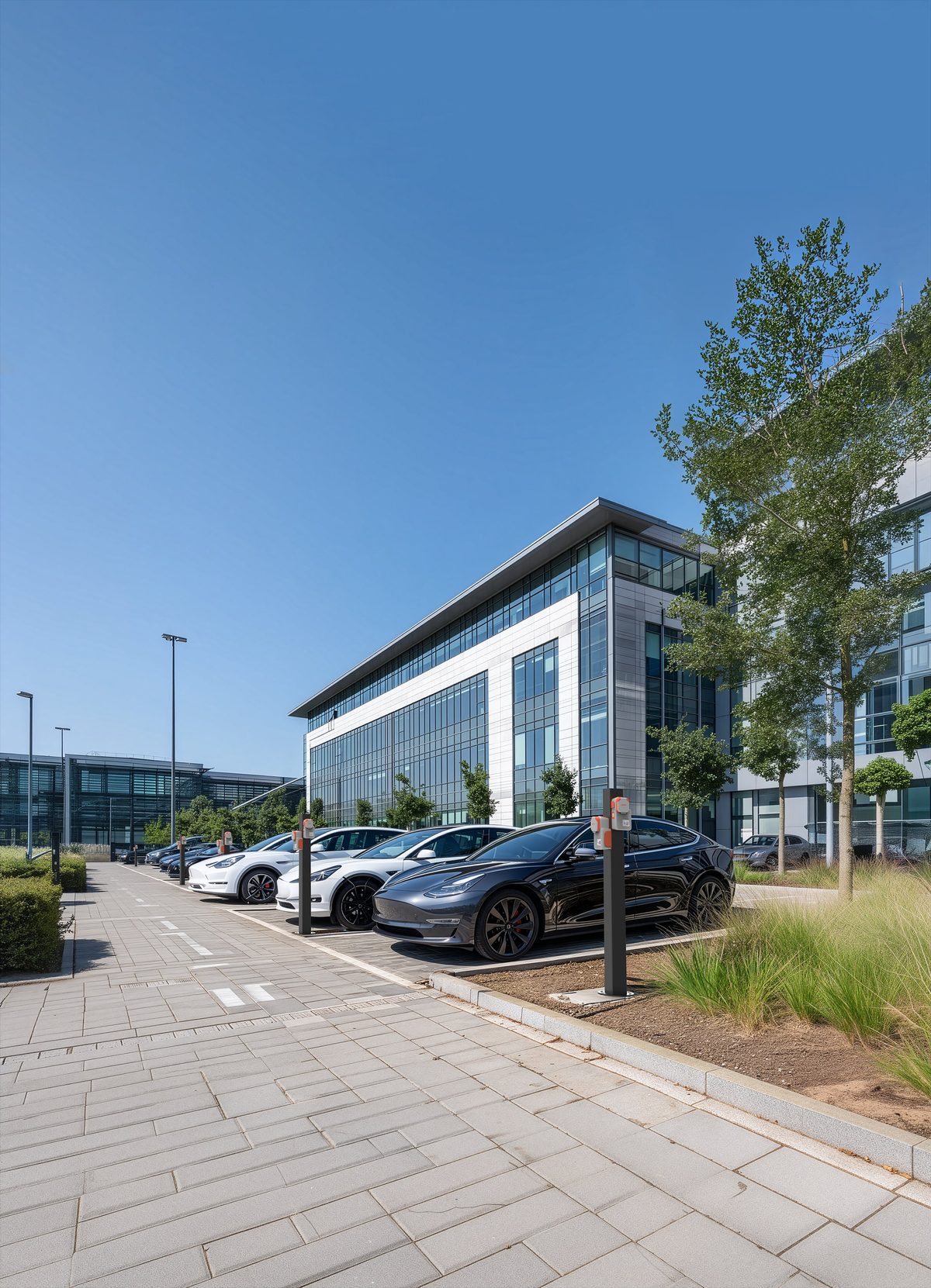
Three obstacles that stall public charging projects.
CAPEX is too high. A fast charger of 22 to 50 kW costs between €3,000 and €15,000 to purchase, not counting civil works, reinforced grid connection and compliance upgrades. For twenty spaces, the bill can reach several hundred thousand euros before a single vehicle has been charged.
OPEX is unmanageable. Service contracts on fast chargers often run between €400 and €800 per charger per year. Multiplied by twenty chargers, these recurring costs represent an annual budget that few local authorities have anticipated.
The business model doesn't hold up. With an actual utilisation rate often below 20% and insufficient revenue, the infrastructure becomes a chronic cost centre — at the expense of other public investments.
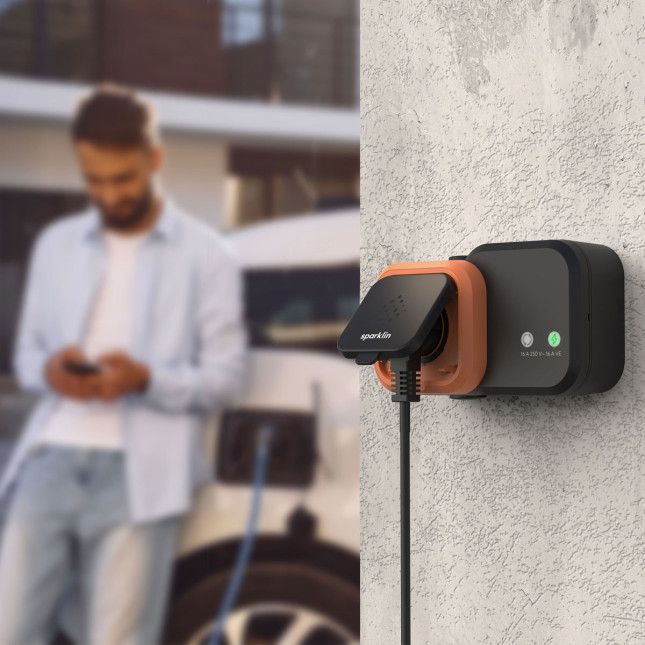
Three pillars for a financially balanced public charging service.
CAPEX reduced to the bare minimum
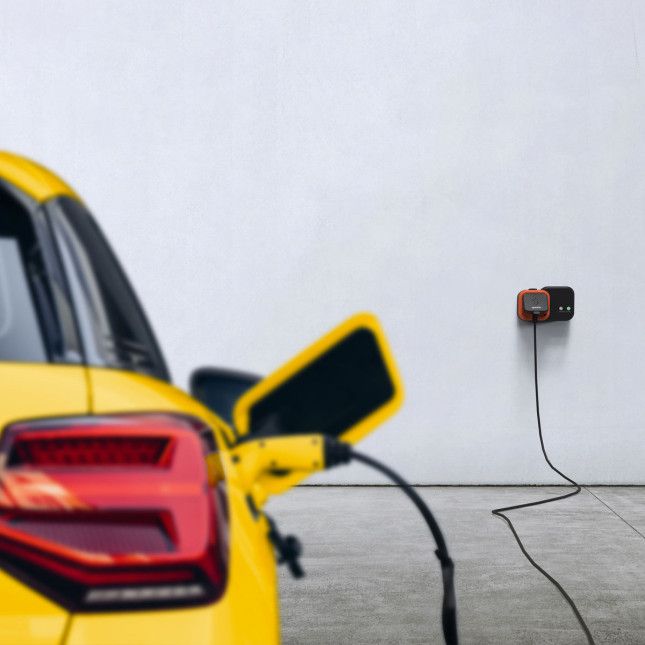
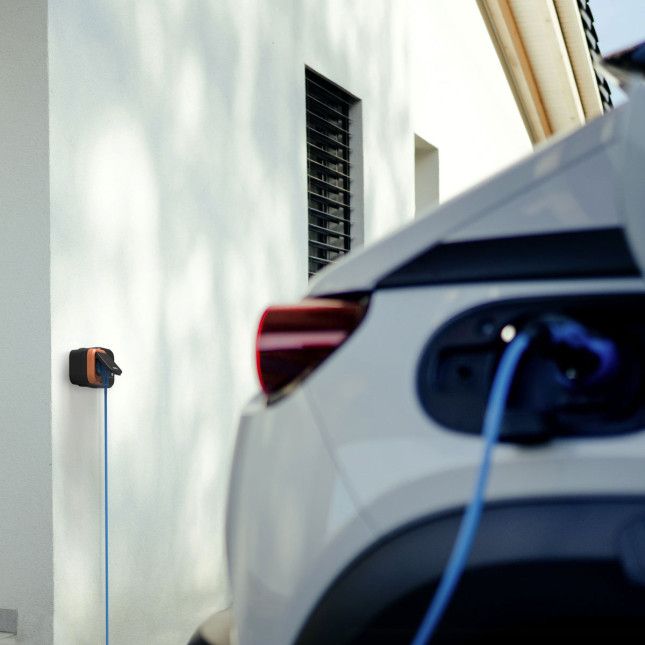
Sparklin sockets operate as slow charging at 3.7 kW — under €300 per unit, versus several thousand for a fast charger. No grid connection reinforcement, no additional power request to Enedis, no trenching. The local authority relies on its existing electricity subscription and deploys its charging points within a few days, with no heavy works.
Controlled OPEX via Spark Pilot
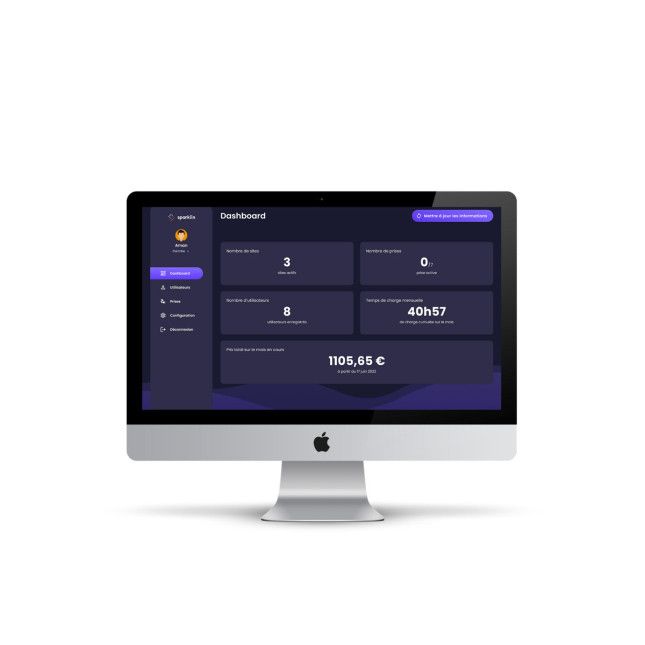
From a single interface, the local authority views the status of each charging point and any anomalies in real time. Remote maintenance is built in: the vast majority of incidents are resolved remotely. Load balancing ensures that electricity consumption never exceeds the subscription cap, even when all sockets are charging simultaneously.
The local authority becomes the CPO
Sparklin lets local authorities become the operator of their own charging points (CPO) via the platform, or delegate that role to Sparklin. Each session generates direct revenue, paid out automatically.
City-centre public car park · 20 spaces · turnover of 3 vehicles/space/day
| Indicator | Sparklin solution | Conventional fast chargers |
|---|---|---|
| Hardware cost (10 charging points) | 3 600 € | 14 000 € |
| Works and installation | 20 000 € | 37 000 € |
| Spark Pilot subscription | ~ €75 / month | ~ €200 / month |
| Annual OPEX / maintenance | 500 € | 3 000 € |
| Annual revenue | 2 040 € | 2 040 € |
| Net annual result | + 640 € | − 960 € |
The Sparklin model doesn't promise exceptional revenue. It promises something more valuable for a local authority: cost control and the absence of a chronic deficit on a public service. Assumptions: rate of €0.35/kWh, average session of 8 kWh, conservative 20% utilisation rate, 300 days/year.
Anticipate LOM obligations — with funding available.
LOM law & ZFE
The LOM mobility framework law (loi d'orientation des mobilités) sets increasing requirements to equip public car parks with charging points. Low-emission zones (ZFE) are accelerating demand. Equipping now means anticipating these obligations rather than facing them under pressure.
European FEDER funds
Depending on the region, European funds (FEDER, FEAMP) can supplement the financing of public charging infrastructure. Local authorities benefit from priority access for projects that contribute to the energy transition.
ADVENIR programme & CEE
The ADVENIR programme subsidises up to 50% of the installation cost for publicly accessible charging stations. Energy Savings Certificates (CEE) allow an additional share to be funded through the obligated parties. Sparklin supports you in putting together subsidy applications to reduce your net CAPEX to the bare minimum.